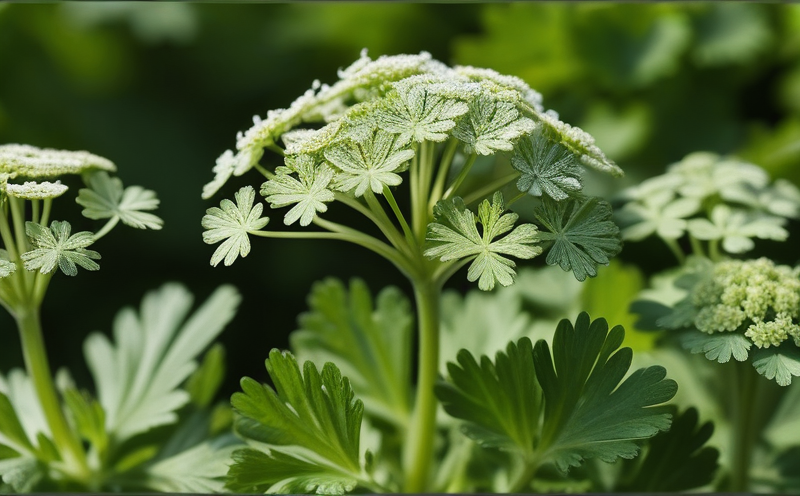
🌿 Parsley

Petroselinum crispum
herbs Biennial herb (usually grown as annual)
Illustration of Parsley
☀️ Sun
Full sun to partial shade; 4-6 hours minimum.
💧 Water
Consistent moisture; do not let soil dry completely. Mulch helps.
🗺️ Zones
USDA zones 4-9 as biennial; grown as annual in most areas
🪴 Soil Type
Rich, well-draining, moist; pH 6.0-7.0. Add compost. Slow to germinate.
🧪 Soil pH
6.0-7.0 (prefers rich, moist, well-drained soil)
📏 Spacing
6-10 inches apart
📐 Height
12-18 inches (curly); 18-24 inches (Italian flat-leaf)
📅 Days to Maturity
70-90 days from seed (slow germination: 14-28 days)

🍴 Edible Parts

🍽️ ["Leaves"🍽️ "Stems"🍽️ "Root (Hamburg parsley variety)"]

🤝 Companions (7)

🤝 Tomatoes
Improves tomato health and flavor; attracts beneficial hoverflies that prey on aphids.
Parsley and asparagus are classic companions; parsley repels asparagus beetles.
🤝 Corn
Parsley provides ground cover, retains soil moisture, and attracts beneficial insects.
🤝 Roses
Parsley is said to enhance rose fragrance and repel rose pests.
🤝 Carrots
Related plants; parsley attracts some carrot pests away from carrots (trap crop effect).
Chives repel aphids that might target parsley; complementary growing needs.
Parsley thrives in the partial shade cast by tomato plants; attracts hoverflies whose larvae consume aphids. A classic companion pair recommended by extension services and the Almanac.

⚠️ Keep Apart (6)

Parsley can cause lettuce to bolt prematurely through root interactions.
⚠️ Mint
Mint's aggressive spreading overwhelms parsley.
⚠️ Allium family (controversial)
Some gardeners report reduced parsley growth near onions — evidence mixed.
Mutual growth inhibition — garlic and parsley stunt each other's development when planted in close proximity.
Mint and parsley are incompatible — competing nutrients, shared disease risks, or allelopathic interference.
Spearmint and parsley are incompatible — competing nutrients, shared disease risks, or allelopathic interference.

💊 Medicinal Uses

{"conditions_treated": ["Urinary tract infections and bladder health (mild diuretic and antimicrobial)", "Kidney stones (may help prevent calcium oxalate stones)", "Water retention and edema (potent natural diuretic)", "Bad breath (chlorophyll-rich \u2014 natural deodorizer)", "Digestive issues (gas, bloating, indigestion)", "Menstrual disorders (emmenagogue \u2014 promotes menstrual flow)", "Anemia (high in iron and vitamin C for absorption)", "Arthritis and rheumatism (anti-inflammatory)"], "preparation_methods": ["Parsley tea: 2 tsp fresh/dried leaves steeped 10 min; 2-3 cups daily for UTI and water retention", "Fresh juice: Small amounts of parsley juice for kidney cleansing (use cautiously)", "Tincture: 1:5 in 40% alcohol; 2-4ml 3x daily as diuretic", "Poultice: Crushed fresh leaves applied to insect bites and bruises", "Culinary: Regular dietary inclusion; chew fresh leaves for bad breath", "Infused oil: Parsley seed oil (very potent \u2014 professional use only)"], "active_compounds": ["Apiol", "Myristicin", "Flavonoids (apigenin, luteolin)", "Vitamin C", "Furanocoumarins"], "toxicity_warnings": "DO NOT use medicinal doses during pregnancy (apiol is a uterine stimulant and can cause miscarriage). Avoid large medicinal doses while breastfeeding. Parsley seed oil is TOXIC \u2014 contains high apiol/myristicin; never ingest. High doses of parsley tea may cause kidney irritation in susceptible people. Photosensitizing \u2014 may increase sun sensitivity."}

📜 History & Traditional Uses

{"medieval": "Associated with death and the underworld in European folklore \u2014 'parsley goes to the devil and back seven times' explaining slow germination. Used in medieval medicine for 'gravel' (kidney stones) and dropsy (edema).", "ancient": "Greeks associated parsley with death; used on tombs ('de's need of parsley' meant someone near death). Romans wore parsley at feasts to prevent intoxication and aid digestion. Not eaten, only used ceremonially and medicinally.", "folk_medicine": "Traditional European remedy for 'spring tonics' \u2014 parsley as a blood purifier after winter. Used to 'bring on delayed menses.' Parsley tea for water retention. The root (Hamburg parsley) was cooked as a medicinal vegetable for urinary complaints."}