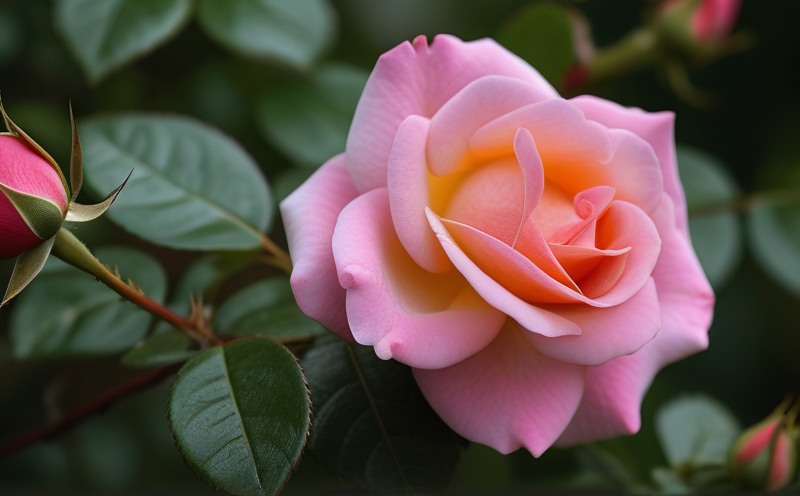
🥑 Rose

Rosa spp.
exotics shrub
Illustration of Rose
☀️ Sun
full sun (at least 6 hours)
💧 Water
moderate to high (consistent moisture)
🗺️ Zones
3-11 (varies widely by species and cultivar)
🪴 Soil Type
loamy, rich in organic matter
🧪 Soil pH
6.0-7.0
💧 Drainage
well-drained
📏 Spacing
2-6 feet (depending on variety)
📐 Height
1-20 feet (miniature to climbing)
📅 Days to Maturity
365-730 days (1-2 years to significant bloom)

🍴 Edible Parts

🍽️ petals🍽️ hips (fruit)

🤝 Companions (11)

Garlic repels aphids, Japanese beetles, and spider mites from roses; its sulfur compounds improve rose fragrance and disease resistance
Lavender repels aphids while attracting pollinators; the classic cottage garden pairing provides complementary colors and scents
Chives deter aphids and black spot on roses; planted around the base of roses, they form a protective ring against crawling pests
🤝 Scented Geranium (Pelargonium)
Scented geraniums repel Japanese beetles, rose chafers, and other pests with strong essential oils; they also attract pollinators.
Parsley attracts hoverflies whose larvae consume aphids on roses; low-growing form makes an attractive, functional edging around rose beds.
Thyme suppresses weeds around rose bases; flowers attract parasitic wasps controlling rose pests and it tolerates drier soil roses prefer.
🤝 Marigold (Tagetes)
Marigolds deter nematodes and insect pests from roses; root exudates suppress soil-borne fungal pathogens that cause rose dieback.
🤝 Catmint (Nepeta)
Catmint is a classic rose companion — repels aphids, covers bare rose legs with attractive foliage, and its blooms complement roses.
Yarrow attracts ladybugs, lacewings, and hoverflies that prey on rose pests; deep roots mine minerals available to roses as mulch.
🤝 Allium (ornamental onion)
Ornamental alliums repel aphids and protect against black spot and powdery mildew; globe flowers add architectural interest.
🤝 Alyssum (Sweet)
Sweet alyssum forms living mulch suppressing weeds; tiny flowers attract beneficial wasps and hoverflies that control rose pests.

⚠️ Keep Apart (7)

⚠️ Walnut (Black)
Juglone toxicity causes severe wilting, leaf yellowing, and dieback in roses — they are among the most juglone-sensitive ornamentals
Eucalyptus produces allelopathic oils that suppress rose growth and flowering; its aggressive water uptake starves roses of moisture
⚠️ Boxwood (Buxus)
Boxwood roots compete heavily with rose roots in the same soil zone, and both are susceptible to similar fungal pathogens
⚠️ Large Shade Tree
Large trees compete heavily for water and nutrients; shade reduces rose flowering — roses need at least 6 hours of direct sun.
⚠️ Invasive Mint
Mint's aggressive runners invade rose root zones and are nearly impossible to remove without damaging roses; competition weakens them.
⚠️ Morning Glory / Bindweed
Bindweed vines overwhelm rose bushes, reducing light and air circulation which promotes black spot and other fungal diseases.
⚠️ Cypress / Juniper (large)
Large conifers create dry, acidic soil conditions stressing roses; dense shade and aggressive roots make cultivation beneath them nearly impossible.

💊 Medicinal Uses

Rose hips are one of the richest natural sources of vitamin C, containing 20-60 times more than oranges by weight, along with vitamins A, E, and B-complex, flavonoids, and carotenoids. Rose hip preparations are clinically proven to reduce osteoarthritis pain and inflammation. Rose petals contain essential oils with mild sedative, antidepressant, and anti-inflammatory properties. Rose water is a traditional remedy for skin irritation, eye infections, and as a gentle astringent. Rose essential oil (attar of rose) is used in aromatherapy for anxiety, depression, and grief. The gallic acid and quercetin in rose petals have antioxidant and antimicrobial properties.

📜 History & Traditional Uses

Roses have been cultivated for over 5,000 years, with evidence of garden cultivation in ancient China, Persia, and Mesopotamia. In ancient Rome, roses were used extravagantly at banquets — rose petals were scattered on floors and in wine. During the 15th century Wars of the Roses in England, the red and white rose became dynastic symbols. The Empress Josephine Bonaparte assembled one of history's most comprehensive rose collections at Malmaison, commissioning Pierre-Joseph Redouté's famous botanical illustrations. Rose oil (attar of rose) has been produced in Bulgaria's Rose Valley for centuries as one of the most precious essential oils. In Persia, roses became central to poetry, mysticism, and garden design.

📝 Notes

Roses are among the most diverse and widely cultivated ornamental plants, with over 300 species and tens of thousands of cultivars. They are classified into groups: hybrid teas, floribundas, grandifloras, climbers, shrubs, miniatures, and old garden roses. Roses require consistent moisture, good air circulation, and regular feeding — they are heavy feeders. Common diseases include black spot, powdery mildew, and rust. Aphids, Japanese beetles, and thrips are common pests. Garlic and allium companions are traditionally planted with roses to deter aphids. Rose hips develop if spent flowers are not deadheaded, providing winter interest and food for wildlife.