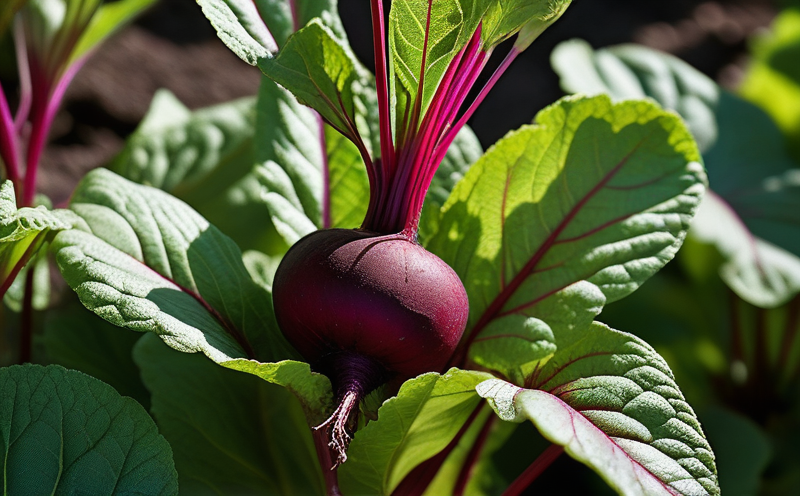
🥦 Beet
Beta vulgaris subsp. vulgaris (Conditiva Group)
vegetables
root vegetable (chenopod)
☀️ Sun
Full sun (6, 8 hours); tolerates light partial shade , particularly beneficial in Zones 7+
💧 Water
Medium; 1 inch per week consistently; irregular watering causes woody roots, poor color, and cracking; mulch to maintain even soil moisture
🗺️ Zones
2, 3, 4, 5, 6, 7, 8, 9, 10
🧪 Soil pH
6.0, 7.0 (slightly acidic to neutral); pH below 6.0 causes stunted roots
🪴 Soil Type
Deep, loose, sandy loam with good organic matter; avoid fresh manure , causes forked/hairy roots and excess leaf growth at expense of roots; add boron if deficient (boron deficiency causes black heart/internal black spot)
🚿 Drainage
Well-drained essential; compacted or waterlogged soil causes deformed roots and rot
📏 Spacing
Seeds 2 inches apart, thin to 3, 4 inches; rows 12, 18 inches; each 'seed' is actually a fruit (seedball) containing 2, 4 seeds , thinning essential
⏱️ Maturity
50-70 days (from seed); baby beets at 35-45 days
🍴 Edible Parts
🍽️ Root (swollen taproot , raw, cooked, roasted, pickled)
🍽️ Leaves/greens (beet greens , excellent cooked, similar to Swiss chard)
🍽️ Stems (edible , colorful, cook with greens)
🍽️ Baby beet leaves (salad use)
Key:🤝 Grows well together❌ Keep apart☀️ Sun needs💧 Water🗺️ Hardiness zone
🤝 Companions (13)
Beets have shallow roots that don't compete with broccoli; they loosen soil for brassicas.
Beans fix nitrogen to support beet root development; different root depths avoid competition
Caraway attracts beneficial insects that protect beets from pests; compatible root zones.
Repels flea beetles and aphids; attracts pollinators when flowering
Beets benefit from garlic's pest-repelling sulfur compounds; compatible root depths.
Beets and kale share similar growing conditions; beets' shallow roots complement kale's deep roots.
Beets loosen soil for kohlrabi roots; both are cool-season crops that grow well together.
Lettuce grows in beet's partial shade; both cool-season; lettuce's shallow roots don't compete with beet taproots
Suppresses nematodes; repels general garden pests
Onions deter pests including aphids and flea beetles from beets. A mutually beneficial pair recommended by WVU Extension and the Almanac.
Radishes mark rows for slower-germinating beets; radishes harvested before beets need space
⚠️ Keep Apart (5)
Fava Bean and beet are incompatible , competing nutrients, shared disease risks, or allelopathic interference.
Allelopathic , inhibits beet root development
⚠️ Field mustard / Charlock
Wild mustard relatives strongly inhibit beet growth through allelopathy
Mustard and beets are antagonistic , mustard's root exudates inhibit beet growth
Pole beans may stunt beet growth , nitrogen levels too high for proper root development; beets need moderate, not high, nitrogen
💊 Medicinal Uses
Medicinal Properties
- Contains betalains (betanin) , powerful antioxidant and anti-inflammatory pigments; may help reduce oxidative stress
- High in dietary nitrates , converts to nitric oxide, improving blood flow, lowering blood pressure, and enhancing athletic performance
- Excellent source of folate (essential for fetal development), manganese, and potassium
- Beet greens are exceptionally high in vitamin K, vitamin A (beta-carotene), and calcium
- Traditionally used as a blood tonic and liver support; betaine supports liver function
📝 Growing Notes
Beet 'seeds' are actually multi-germ seedballs containing 2, 4 seeds each , always need thinning. Two main types: globe/round (most common) and cylindrical (e.g., 'Cylindra' , uniform slices for canning). Beets are biennials grown as annuals. Golden and Chioggia (candy-stripe) varieties don't 'bleed' red when cooked. Boron deficiency is common , add borax solution if black spots appear in roots. Soaking seeds 24 hours before planting improves germination. Harvest when 1.5, 3 inches diameter , larger beets become woody.
🛒 Buy Seeds & Plants
Baker Creek Heirloom Seeds
Johnny's Selected Seeds
Botanical Interests
True Leaf Market
Burpee
Territorial Seed Company
Plot Buddies is reader-supported. When you buy through links on our site, we may earn an affiliate commission at no extra cost to you. This does not affect our plant recommendations. We only link to retailers we trust.