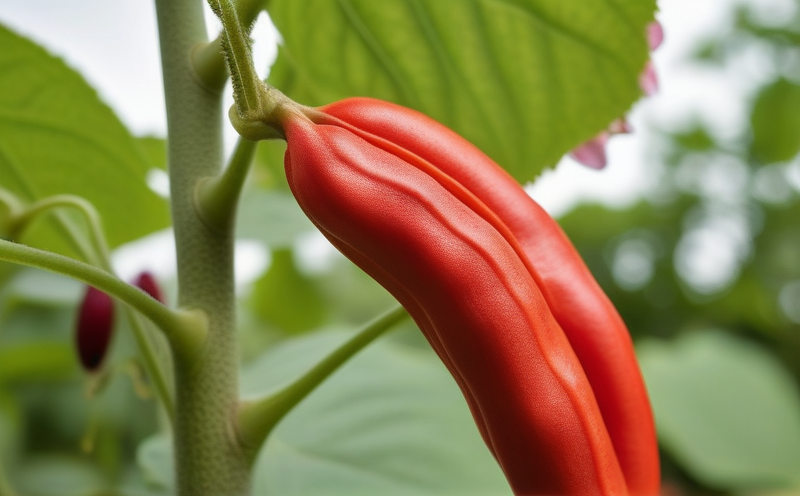
🥕 Runner Bean

Phaseolus coccineus
vegetables legume (perennial grown as annual in most climates)
Illustration of Runner Bean
☀️ Sun
Full sun (6–8+ hours); runner beans tolerate slightly more shade than pole beans — partial shade in hottest climates extends flowering
💧 Water
Medium; 1 inch per week; consistent moisture critical during flowering and pod set; water at base — wet foliage promotes fungal diseases (rust, powdery mildew); reduce watering when pods mature
🗺️ Zones
3, 4, 5, 6, 7, 8, 9, 10, 11
🪴 Soil Type
Rich, well-drained, loamy soil with moderate organic matter; do NOT over-fertilize with nitrogen — beans fix their own; too much nitrogen = all vines, few flowers/pods; add phosphorus and potassium for flowering
🧪 Soil pH
6.0–7.0 (slightly acidic to neutral); beans are sensitive to acidic soil — lime if pH < 6.0
💧 Drainage
Well-drained essential; beans are very sensitive to wet soil — seeds rot in cold, wet conditions
📏 Spacing
Seeds 4–6 inches apart at base of trellis/pole; rows 3 feet apart; runner beans need a STURDY trellis (6–8 feet tall) — they're heavier and more vigorous than pole beans
📅 Days to Maturity
60-80 days (from seed); perennial in mild climates, annual in temperate

🍴 Edible Parts

🍽️ ["Pods (young green pods \u2014 harvest at 4\u20136 inches before seeds bulge; stringy if left too long)"🍽️ "Seeds (fresh shelled beans \u2014 white🍽️ pink🍽️ purple speckled; or dried for winter storage)"🍽️ "Flowers (scarlet/orange \u2014 edible🍽️ sweet nectar; hummingbird attractant)"🍽️ "Roots (tuberous roots in Zone 8+ \u2014 potentially edible🍽️ but rarely consumed)"]

🤝 Companions (8)

🤝 Corn (Three Sisters)
Classic Three Sisters system — runner beans climb corn stalks as living trellis; beans fix nitrogen for corn; mutually beneficial in Mesoamerican agriculture for millennia
🤝 Squash/Pumpkin (Three Sisters)
Squash provides living mulch/shade suppressing weeds and retaining soil moisture for corn and beans; spiny squash leaves deter raccoons and pests; completes the Three Sisters trio
🤝 Savory (summer)
'The bean herb' — repels bean beetles and improves bean growth; classic European companion; may enhance flavor
Trap crop for aphids (black bean aphids prefer nasturtiums); repels whiteflies and squash bugs; attracts pollinators
🤝 Rosemary/Sage
Repels bean beetles and flea beetles; aromatic oils mask bean scent from pests
Repels Mexican bean beetles and nematodes; attracts beneficial insects
Radishes repel bean beetles; quick crop harvested before beans climb; minimal space competition
🤝 Potato (companion)
Beans and potatoes are mutually beneficial — beans repel Colorado potato beetles; potatoes repel Mexican bean beetles; complementary root depths (classic European intercropping)

⚠️ Keep Apart (5)

⚠️ Onion/Garlic/Allium
Alliums inhibit bean growth — sulfur compounds interfere with bean's nitrogen-fixing rhizobia bacteria; stunted beans and reduced yield
Allelopathic — strongly inhibits bean growth and nitrogen fixation
⚠️ Gladiolus (flower)
Gladiolus and runner beans inhibit each other's growth; avoid in flower/vegetable garden border
⚠️ Brassicas (kale, cabbage, broccoli)
Brassica root exudates may inhibit bean growth; beans' nitrogen fixation may cause brassicas to produce excess leaves at expense of heads
Sunflowers are allelopathic to beans — inhibits germination and stunts growth; keep separate

💊 Medicinal Uses

["Excellent source of plant-based protein (when shelled/dried) and dietary fiber", "Rich in folate, magnesium, potassium, and iron", "Contains phaseolamin \u2014 a protein that inhibits alpha-amylase (starch digestion), being studied for blood sugar management", "Good source of B vitamins, particularly thiamine (B1) and B6", "Insoluble fiber supports digestive health and cholesterol reduction"]

📝 Notes

Runner beans are closely related to but distinct from common pole beans (Phaseolus vulgaris). Key differences: runner beans have showy scarlet/orange/white flowers (hummingbirds LOVE them), are more cold-tolerant (can be planted slightly earlier), are perennial in Zones 7+ (tuberous roots survive mild winters), and have thicker, meatier pods. Flowers are self-fertile but benefit from bee pollination for full pod set. Runner beans prefer COOLER conditions than pole beans — they thrive in UK, Pacific Northwest, and high-altitude gardens where pole beans struggle. In hot climates (>85°F), flower drop is a problem — provide afternoon shade. Soak seeds 2–4 hours before planting. 'Scarlet Runner' is the classic variety — ornamental AND productive. Excellent for edible landscaping on arbors and teepees.