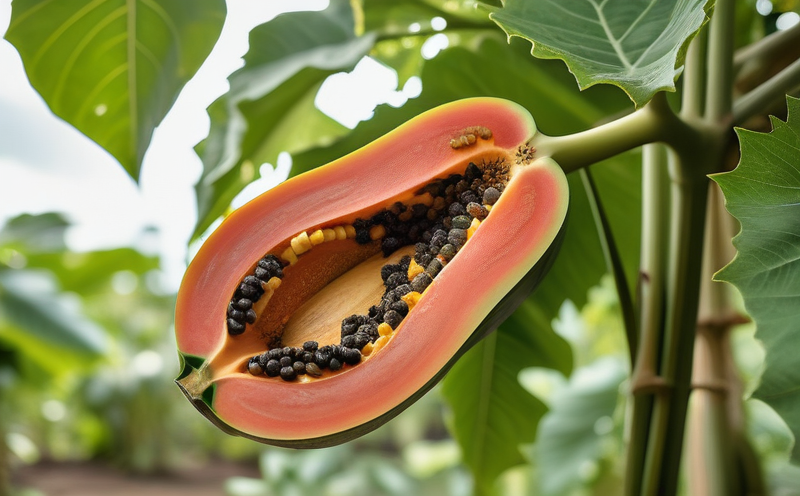
🍎 Papaya
🍴 Edible Parts
🤝 Companions (11)
⚠️ Keep Apart (3)
💊 Medicinal Uses
Papaya fruit contains papain, a powerful proteolytic enzyme that aids protein digestion and is used commercially as a meat tenderizer. The enzyme has anti-inflammatory, wound-healing, and anti-edema properties. Papaya leaf extract is used to increase platelet counts in dengue fever patients and has shown antimalarial and hepatoprotective properties. The fruit is exceptionally rich in vitamin C (more than oranges), vitamin A, and folate. Papaya seeds have anthelmintic (anti-parasitic) and antibacterial properties when consumed. Unripe papaya has been used traditionally as a contraceptive and to induce menstruation.
📜 History & Traditional Uses
Papaya originated in southern Mexico and Central America, where it was domesticated by Maya and Aztec civilizations. Spanish and Portuguese explorers spread papaya throughout the tropics in the 16th century, and it naturalized rapidly across the Caribbean, Africa, India, Southeast Asia, and the Pacific Islands. In traditional medicine across many tropical cultures, papaya leaf poultices were used for wounds and skin ulcers. The fruit became a staple food across the tropical world due to its rapid growth, high yield, and year-round production.
📝 Notes
Papaya is one of the fastest fruit-producing plants — it can bear fruit within 6-12 months from seed. The plant is not a true tree but a giant herbaceous plant with a hollow, unbranched trunk. Papaya plants are typically dioecious (male and female flowers on separate plants) or hermaphroditic. They require excellent drainage and will die quickly in waterlogged soil or frost. Papaya is highly susceptible to papaya ringspot virus, a devastating disease transmitted by aphids. Plants are productive for 3-5 years, after which they become too tall and yields decline. The white latex sap can cause skin irritation in sensitive individuals.