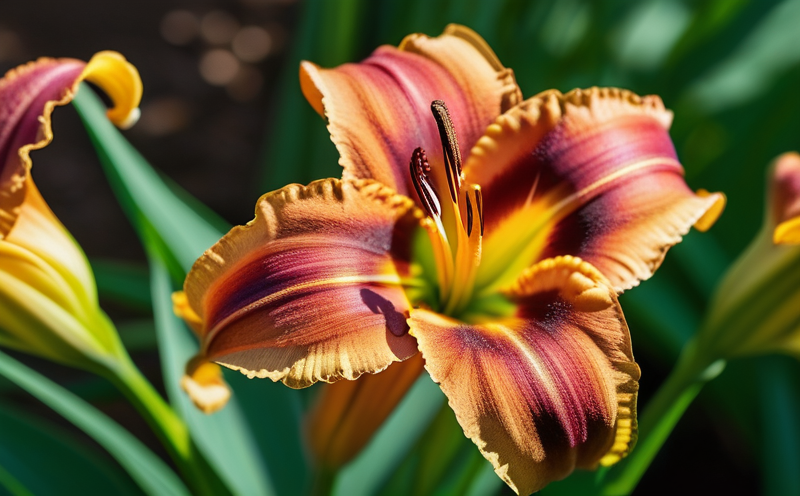
🌸 Daylily
Hemerocallis spp.
flowers
herbaceous perennial
Asphodelaceae
☀️ Sun
Full sun to partial shade (minimum 4, 6 hours for best bloom)
💧 Water
Low, medium; drought-tolerant once established; more water during bloom season increases flower count
🗺️ Zones
3, 4, 5, 6, 7, 8, 9
🧪 Soil pH
6.0, 7.0 (slightly acidic to neutral)
🪴 Soil Type
Adaptable; tolerates most soils from sandy loam to clay if well-drained; benefits from organic matter
🚿 Drainage
Well-drained; tolerant of occasional wet feet but not permanently soggy
📏 Spacing
18, 24 inches apart
📐 Height
1, 4 feet (depending on cultivar)
⏱️ Maturity
Blooms first year from divisions; 2, 3 years from seed
🍴 Edible Parts
🍽️ Flower buds (stir-fried, tempura, soups , "golden needles" in Chinese cuisine)
🍽️ Young shoots
🍽️ Tubers (cooked)
Key:🤝 Grows well together❌ Keep apart☀️ Sun needs💧 Water🗺️ Hardiness zone
🤝 Companions (12)
Black-eyed Susans and daylilies create classic summer perennial borders; both tough and sun-loving.
🤝 Coneflower (Echinacea)
Coneflowers and daylilies bloom together in midsummer; both drought-tolerant prairie-style perennials attracting pollinators.
Lavender and daylilies share love of full sun and well-drained soil; lavender repels pests with silver foliage contrast.
Universal garden companion
Attracts pollinators
🤝 Ornamental Grass
Ornamental grasses provide texture contrast with daylily's strappy foliage; deep roots don't compete.
🤝 Russian Sage
Russian sage's airy purple blooms complement daylily flowers; both thrive in hot, dry, sunny conditions.
Salvias bloom simultaneously with daylilies; attract hummingbirds while daylilies provide bold flower mass.
Sedums provide late-season interest after daylilies finish blooming; both extremely drought-tolerant.
🤝 Shasta Daisy
Shasta daisies and daylilies are classic cottage garden companions; white daisies contrast with colorful daylilies.
⚠️ Keep Apart (7)
⚠️ Aggressive tree roots (Maple/Willow)
Daylilies struggle with shallow aggressive tree roots; bloom count drops significantly.
⚠️ Creeping Charlie / Ground Ivy
Creeping charlie smothers daylily crowns and is extremely difficult to remove from within clumps.
Competes aggressively
Juglone sensitive
⚠️ Wet / boggy soil
Permanently soggy soil causes rhizome rot and fungal diseases that kill daylilies.
💊 Medicinal Uses
Medicinal Properties
- Traditional Chinese Medicine: diuretic, anti-inflammatory, for insomnia
- Contains colchicine-like compounds with anti-tumor research interest
- Rich in antioxidants including quercetin and kaempferol
📝 Growing Notes
Extremely hardy and adaptable perennial. Each flower lasts one day but many buds. Thousands of cultivars. Excellent for erosion control on slopes. Divide every 3, 5 years.
🛒 Buy Seeds & Plants
Baker Creek Heirloom Seeds
Johnny's Selected Seeds
Botanical Interests
True Leaf Market
Burpee
Territorial Seed Company
Plot Buddies is reader-supported. When you buy through links on our site, we may earn an affiliate commission at no extra cost to you. This does not affect our plant recommendations. We only link to retailers we trust.